Ebola Virus Disease


Mamude Dinkiye, M.D., MPH

Juba, South Sudan

The Ebola virus was first identified in Western Equatoria State of South Sudan and in a nearby region of Zaire (now the Democratic Republic of the Congo) in 1976 after significant epidemics in Yambuku, northern Zaire, and Nzara, Southern Sudan. Ebola Virus Disease, formerly known as Ebola Hemorrhagic Fever (EHF) is one of the most virulent diseases known to humankind. It causes death in 50-90% of all clinically ill cases. The disease is caused by infection with the Ebola virus, named after a river in the Democratic Republic of the Congo (Ebola River).

There are 5 distinct sub-types of Ebola virus:

  • Ebola Zaire——————DRC (Democratic Republic of Congo)
  • Ebola Sudan—————-South Sudan
  • Ebola Cote D’Ivore——-Cote D’Ivore
  • Ebola-Bundibugyo——-Uganda
  • Ebola Reston————– USA   (Primates only)

How Ebola Outbreaks Start

First human cases start with infection by an animal-Chimpanzees, gorillas, monkeys, forest antelopes, fruit bats, porcupines… However the origin of the current outbreak is unknown.

Infection from person-to-person creates an outbreak

-Direct or indirect physical contact with body fluids of infected person (blood, saliva, vomitus, urine, stool, semen)

Well known locations where transmission occurs

– Hospital: Healthcare workers, other patients, unsafe injection practices, poor management of infectious waste

-Communities: Family, friends and contacts caring for patients Funeral practices including body handling, communal hand washing

Ebola transmission

  • Direct contact with wounds, body fluids like blood, saliva, vomitus, stool and urine of a person suffering from Ebola or splashing of such fluids from an infected person into another person’s eyes
  • Direct physical handling of dead bodies of persons who have died of Ebola
  • Handling dead animals especially monkeys
  • Infection can also occur if broken skin or mucous membranes of a healthy person come into contact an Ebola patient’s infectious fluids such as soiled clothing, bed linen, or used needles.
  • Health workers frequently get exposed to the virus when caring for Ebola patients, when they do not wear personal protection equipment, such as gloves, masks when caring for the patients.

The incubation period of Ebola

The time interval from infection to onset of symptoms is 2 to 21 days.

During this time, the patient becomes contagious once they begin to show symptoms.

They are not contagious during the incubation period

Transmission can still occur 7 weeks after recovery e.g. through semen

Clinical Symptoms of Ebola

Initial Phase:

  • Sudden onset of fever
  • Intense weakness
  • Muscle pain
  • Headache and sore throat

Second phase

  • Vomiting, diarrhea and skin rash
  • Impaired kidney and liver function, and
  • In some cases both internal and external bleeding

Severe Cases:

  • Bleeding under skin and internal organs

Laboratory diagnosis

At the initial stages of the infection clinical diagnosis may be difficult because the early symptoms like fever, vomiting and diarrhea are often seen in other diseases that occur more frequently.

Ebola virus infections can only be confirmed through advance laboratory testing.

Testing is conducted in selected laboratories with maximum biological containment standards because

Ebola samples are an extreme biohazard risk.

Ebola treatment / supportive therapy

There is currently no specific treatment to cure the disease, however, new drug therapies ( eg. Zmap) are under evaluation and trial.

Severely ill patients require intensive supportive care which includes intravenous fluids or oral rehydration with solutions that contain electrolytes because they are frequently dehydrated.

Some patients will recover with the appropriate medical care.

To prevent further spread of the virus, people that are suspected to have the disease should be isolated from other patients and treated by health workers using strict infection control precautions


Prevention and Control

  • Currently there is no licensed vaccine for Ebola virus disease, several vaccines are being tested but none is available for clinical use.
  • Avoid direct contact with body fluids, blood, saliva, vomitus, urine, and stool by wearing protective materials like gloves and goggles.
  • Do not touch wounds of an infected person with unprotected hands.
  • Do not use skin piercing instruments that have been used on a patient suffering from Ebola.
  • After handling a patient suffering from Ebola, you must wash your hand thoroughly with soap and water.
  • Animal products (blood and meat) should be thoroughly cooked before consumption.
  • Avoid handling sick or dead animals especially monkeys, other non-human primates and other forest animals like fruit bats and porcupines.
  • Persons who have died of Ebola must be handled by trained health staff wearing strong protective wear and buried immediately to prevent spread of the disease.
  • Avoid feasting and funeral gatherings during Ebola outbreaks.
  • Raising awareness of the risk factors and measures people can take to protect themselves are the only ways to reduce illness and deaths.

Educational public health messages for risk reduction should focus on:

  • Reducing the risk of wildlife-to-human transmission from contact with infected fruit bats or monkeys/apes, and the consumption of their raw meat
  • Handle animals with gloves and other appropriate protective clothing
  • All animal products (blood and meat) should be thoroughly cooked before consumption
  • Avoid any contact with Ebola patients
  • Gloves and personal protective gear should be worn when taking care of patients at home
  • Regular hand washing should be practiced at all times, and should be strictly done when taking care of patients
  • Burial of people who have died of Ebola should be conducted as soon as possible, under supervision of trained health personnel

Essential components of control

  • National leadership
  • Strong community awareness and support
  • Immediate care of affected patients
  • Strengthen the capacity of the local health system

Stop transmission:

  • Actively identify, investigate ALL new cases, contacts, deaths
  • Maintain detailed databases
  • Monitor contacts for 21 days (isolate if ill)
  • Confirm absence of virus by testing during recovery

Prevent

  • Informed healthcare workers, consistent infection control /prevention
  • Culturally-sensitive practices to reduce transmission


 Dr Mamude Dinkiye is a pediatrician. He completed medical school at Jimma Univerisity and a speciality training in Pediatrics from the School of Medicine at  Addis Ababa University. He also holds a Mater of Public Health degree from the School of Public Health at Hawassa University. He currently practices and lives in South Sudan.


Posted in Current events, Health | Leave a comment

A piece of my day…unpleasant surprise

Here comes the much awaited summer after the coldest winter in decades. It didn’t warm up in earnest until June. New medical students, residents and fellows were eagerly waiting for the start of patient rounds. Hospital assignments in July need especial attention until the interns and residents settle in. Some had travelled across oceans and were completely new to the culture. Others had just left their loved one for the first time and home sick in a new city.
The anxiety of rounding with attending physicians makes everyone nervous about a trivial medical question that can be thrown at you that can take you off guard. So when the attending physician walked in at 9 am everyone was ready to round having made final touches to either vital signs or physical exam findings or assessment and plans about their patients.
The introduction was brief: a medical student from Kansas, an intern from Detroit, a resident from Peru, a visiting scholar from Egypt; a melting pot, like what America is any way.

The attending physician briefly described expectations for the month. The hospital’s teaching rotations are on monthly basis. Trainees get feedbacks and evaluations at the end of each month. Shortly after that they pulled chairs and sat for brief chart rounds before actually going to the patients’ rooms.

It wasn’t long before everyone started to feel unease, some even uncomfortable. The questions were appropriate to the level of training and they picked them up one by one with correct answers. What a smart group it was. They were not interrupted by pages from the nurses either. The attending physician was also nervous.

There was a strong and non –verbal signal, foot odour!

The human scent is genetically controlled but there are several factors that can influence it such as dietary and medicinal intake and use of fragrance products. When there is over secretion of sweat or what is termed as hyper-hyperhidrosis, the excessive water leads to bacterial overgrowth creating malodor which can create embarrassment and diminishes self-confident. Some individuals may not smell that particular odor (anosmia) and may not recognize it until alerted. Sweat on the other hand is very important to regulate body temperature enabling us to live in different climates. Sweat gland secretions are odorless but also secrete malodor precursors such as proteins, lipids, volatile short-chain fatty acids which when metabolized by bacterial can give rise to malodour. Emotional stimuli can also lead to sweat secretions particularly from palms and soles where there is high concentration of sweat glands. Foot odour is mainly due to short chain fatty acids. Isovaleric acid is a common foot odourant. It is catabolized from glycerol and lactic acid by bacterias which are part of the normal skin flora such as Propionibacteria, Staphylococcus, and Corynebacteria. Bacterial prefer humid environment. Topical anti-perspirants to diminish sweat which often contain metallic salts are often first lines of treatment. Local every day remedies such as baking soda or anti-microbial agents and odour absorbers can also be employed as treatment.

The round continued in to bedsides. The odour got worse as the day went by. Most managed distracted by the teaching and the work load ahead of them.

No one was sure where it was coming from until of course he left…

That physician was me.

Reference
Int J Cosmet Sci. 2011 Aug;33(4):298-311.

Posted in Uncategorized | 2 Comments

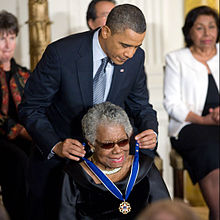
REMEMBERING MAYA ANGELOU: One of the greatest poet, writer, novelist, activist and educator

The story of an extraordinary woman

Maya2

How a woman with very humble beginnings and no college education became world renowned professor of literature/American studies, ended up having more than 50 honorary degrees and earned the highest civilian honor/award-the Presidential Medal of Freedom.

Early Years
Maya Angelou was born on April 4, 1928 in St. Louis, Missouri. Her Father was doorman and a navy dietician and her mother was a nurse and a card dealer. She grew up in St. Louis Missouri (with her parents) and Stamps Arkansas (with her paternal grandmother) after her parents separated when she was 3 years old. After few years her father moved her and her brother to live with their mother in St. Louis. At age seven she was raped by her mother’s boyfriend. This traumatic event devastated her and she wouldn’t speak for five years. With a lot of help and encouragement from one of her teachers she started to speak again. This same teacher is credited by her for introducing her to the writings of Charles Dickens, William Shakespeare and Edgar Allan Poe among others whose literary works forever changed the trajectory of her life in an imaginable way.

Teenage Years
When she was 14 she and her brother moved to Oakland California to live with her mother. She studied music and drama at San Francisco labor school and graduated at the age of 17. Before graduating she worked as the first black female street car conductor. Few weeks after graduation she gave birth to her first and only son.

Adulthood and early careers
In 1951 she married Tosh Angelos, a Greek electrician, former sailor and fellow aspiring musician. Her first marriage ended in 1954. She supported herself by working as waitress, dancer, singer, actor, cook and the likes. During 1954 and 1955 she toured Europe with a production of an opera and she was determined to learn the language of every country she visited and within few years she was proficient in many languages. With the popularity of Calypso music she recorded her first album MISS CALYPSO in 1957. She also sang and performed her own songs in the film CALYPSO HEAT WAVE.

Early literary influence
In 1959 she met writer James Killens who encouraged her to move to New York to focus on her writing where she joined the Harlem writers’ guild and met several authors and was able to publish for the first time. In 1960 she met Martin Luther King Jr. and with her friend James Killens organized fund raising for Southern Christian Leadership and later she became northern coordinator of the organization.
She also began anti-apartheid activism during this time.

Move to Africa
In 1961 she met a South African freedom fighter Vusumzi Make and moved with him to Cairo where she worked as associate editor of the Arab observer newspaper. In 1962 she broke up with Make and moved to Accra Ghana with her son so that he could attend college, unfortunately he was seriously injured in car accident. She worked as administrator of University of Ghana, editor of the African Review, freelance writer for Ghanaian Times, writer and broadcaster for Radio Ghana, actress/performer at Ghanaian National Theatre. She stayed in Ghana until 1965. During her stay in abroad she read, studied and mastered several languages including French, Italian, Spanish, Arabic and West African language Fanti.

Back to America
During his visit to Ghana she met Malcom X in early 1960s and moved back to America in mid 1960s to help him build his new organization of African American Unity. Shortly afterward he was assassinated and the organization dissolved. She was later asked by Dr. Martin Luther King Jr. to serve as Northern Coordinator for Southern Christian Leadership Conference. Dr. King was assassinated in 1968 and she was devastated.

Major Creative Breakthrough and literary accomplishments
Despite all the enormous tragedies and substantial challenges in her life, with the help of her writer friend James Baldwin she started writing again. In 1968 she wrote, produced and narrated a 10 part series of documentaries called BLACKS, BLUES, BLACK about the connection between blues music and African American Heritage. With this work she demonstrated the breadth and depth of her literary imagination and creative genius. She also published her first autobiography I KNOW WHY THE CAGED BIRD SINGS in 1969 to international acclaim and enormous success. The list of her published verse, non-fiction, and fiction now includes more than 30 bestselling titles. A trailblazer in film and television, she wrote the screenplay and composed the song for the 1972 film Georgia. Her script, the first by an African American woman ever to be filmed, was nominated for a Pulitzer Prize. She continued to appear on television and in films including the landmark television adaptation of Alex Haley’s Roots (1977) and John Singleton’s Poetic Justice (1993). In 1996, she directed her first feature film, Down in the Delta. In 2008, she composed poetry for and narrated the award-winning documentary The Black Candle, directed by M.K. Asante.


She has served on two presidential committees, was awarded the Presidential Medal of Arts in 2000, the Lincoln Medal in 2008, and has received 3 Grammy Awards. President Clinton requested that she compose a poem to read at his inauguration in 1993 and her poem “On the Pulse of the Morning” was broadcast live around the world. She was awarded the presidential medal of freedom , the highest civilian award/honor by President Barak Obama in 2011.
Dr. Angelou has received over 50 honorary degrees and was Professor of American Studies at Wake Forest University. Her words and actions continue to stir our imagination, energize our bodies, liberate our minds, and heal our wounds.
Dr. Maya Angelou died Wednesday May 28, 2014 at the age of 86 and may her soul rest in peace.


 Summary by  Solomon Feyissa, M.D.

Posted in Current events | 1 Comment

Fighting for the life of a child in Africa

Narrrated by Dr Lemma (based on a true story)

As usual I was responsible for the whole emergency room, adults and children although I was just an intern! That was the expectation. It was business as usual until a child arrived in distress. He was very young, held tightly by his mother who was sobbing and desperate for help. You don’t have to be a doctor to tell that the child was very sick. His chest jumped up and down, his belly moved in and out, he had high fever. I could hear the abnormal sound in his lungs with my stethoscope. It was severe pneumonia, a major childhood killer.

He needed antibiotics right away! More urgent, he needed supplemental oxygen! I knew there were a few oxygen tanks in the hospital. I went around looking for one and couldn’t find any. I was nervous. I ran to the adult ward and came across a room with a patient on oxygen who was chatting with his extended family. He had chronic lung problem but was recovering. He was on 2 litres of oxygen.
I knew this was my only opportunity to save the child. I politely approached the family and started to explain about the sick child who required oxygen to save his life. I continued and said this is the only oxygen tank available in the hospital and would like to borrow it for short time. The patient and his extended family reacted angrily; they grabbed the oxygen tank and held it tight. The younger relatives told me to leave and threatened to harm me if I touch the oxygen tank. Helpless I tried to explain a little more… “Look he won’t be harmed if he is not on oxygen for few hours! He does not need the oxygen all the time…he is recovering but this could save the life of the child!” It was not enough. I noticed some of the youngsters were standing up and swearing…
I was desperate, frustrated and helpless. I left the room. I still could hear the grunting of the child through the hallway. I had asked the nurse to give him the first dose of antibiotics ASAP. His mother must have wondered about my whereabouts?

“Did the doctor abandon my child?”

I wish she knew what I was going through but there was no time to explain. Suddenly I had an idea! The guards! The guards are the only armed members of the medical team. They are the ones that accompanied us at night to walk on dark streets in the vicinity of the hospital. I walked to the onduty officer in haste almost startling him. He immediately recognized me but was surprised by the urgency of the visit.

“I need help! Patient’s family is threatening to harm me!”

There was no further discussion; he followed me to the room where the adult patient was with his family. He asked the family members to leave immediately except his mother who sat next to the patient. They had to obey, after all he was armed. No question, no explanation.

“Mother, this won’t hurt your son but it will save the life of a child…” She agreed with hesitation.
The patient followed after he sensed that he had no option,

“You can take it but bring it soon.”

I did not waste any time. I immediately grabbed the oxygen tank and ran to the child in the emergency room. Mission accomplished.

The child made it.

In that stressful day, I learned a lesson that there will always be a conflict when resources are scarce but have to give everything to save a life!

Posted in Uncategorized | Leave a comment

The Bone Setter

By Surafel K Gebreselassie

It wasn’t a surprise to see trauma cases every week. They varied from car accidents to simple falls. They were of all ages. The surgical outpatient clinic had just enough things to manage simple fractures and other minor traumas. The room had a desk, two chairs, an examination bed, few materials to make arm slings and simple casts. We also had analgesics and antibiotics.

I was finishing my coffee, one of Ethiopia’s gifts to the world when the nurse alerted me about a patient. It is not a coincidence that coffee originated where mankind did; that is if you believe in science. Many do.

So when Mosisa, a middle aged man from Keffa, was brought drenched in sweat, we were ready to help. He was cutting firewood when he fell. We used to be good at handling trauma. We quickly ticked off the main things; air way, breathing and circulation. He didn’t suffer major injury. His left forearm was swollen and had bruise marks. We send him for X-ray.

The day went buy quickly; a child with snake bite, a girl with a minor cut, a woman with a first degree burn, an elderly man with intestinal obstruction that we had to refer for emergency surgery.

It wasn’t until late in the day that I realized I didn’t see Mosisa back from X-ray. I called the radiology department. He had the X-ray and was sent back with the films but he was nowhere to be found.

Traditional bone setting is practiced in many developing countries. There are over 70,000 traditional bone setters in India, one of the largest groups practicing traditional medicine in the country. Although actual numbers are not available, traditional bone setters are commonly available in Ethiopia and are not limited to rural areas. They offer treatment for fractures and dislocation of bones. They often offer cheaper treatment and are believed to use faster healing methods. Fear of prolonged immobilization, perceived complications such as infections and amputations drives many patients to see traditional bone setters. Where there is lack of access and scarcity of resources, traditional bone setters may be the only readily available option for many patients in many developing countries. While many fractures heal properly with traditional treatment, bone setters often do not appreciate the dangers of tight splints that can, in some instances ,lead to gangrene by cutting out circulations. They often use splints made from split bamboo or strips of wood tightly bound around the limb, and in some cases including local joints. For example, in a study done in Arba Minch Hospital in Southern Ethiopia from 1999 to 2001, there were 49 amputations of which 25 (51%) had been required because of application of tight splints by a traditional bone setter.

It wasn’t just me. It wasn’t just Mosisa who disappeared with his own X-ray films. Many of my co-interns started to see the trend. Some patients would come back the following day or after a day or two with their X-ray films. Those tended to be complicated ones. We never saw the simple fractures again. The patients would walk in, go to the radiology department, pick up their X-ray films and disappear.

There are many smart people in every society although we may not appreciate them readily. One such person living not far from our clinic was a retired high school biology teacher who picked up bone setting. He would send the patients to the clinic where they get free X-rays. The loyal patients would take the films to him as instructed. He would look at the films. Where there is good alignment he placed bamboo splints, charged a few bucks and we no more saw those patients. When he thought it was a complicated fracture or couldn’t read the X-ray well he would send the patients back to the clinic, often the following day or a day after.

I never say Mosisa again. I suspected that he would have had a simple fracture, well aligned, probably had a bamboo splint, paid few buck to the retired biology teacher, went back to cutting his firewood reassured that he is in the safe hands of a clever bone setter in the neighborhood.

References used in the article
J Ayurveda Integr Med. 2011 Oct;2(4):174-8
J Bone Joint Surg Br. 2005 Jan;87(1):102-3.

Posted in Uncategorized | Leave a comment

Albinos, what has lack of an enzyme got to do with a tragedy!

Ignorance and superstition fuel the persecution of albinos.

By Dr Solomon Feyissa

In this day and age many would assume that albinism is a fairly understood phenomenon. However the experience of albinos in some parts of the world doesn’t support this assumption. Rather albinism is misunderstood especially in some parts of Africa resulting in misconception and superstition, contributing to stigma, discrimination and persecution.

Albinism is a congenital disorder characterized by the complete or partial absence of pigment in the skin, hair and eyes due to absence or defect of tyrosinase (an enzyme which synthesizes melanin from the amino acid tyrosine). Albinism results from inheritance of a gene and is known to affect all vertebrates including humans. While an organism with complete absence of melanin is called an albino an organism with only a diminished amount of melanin is described as albinoid. Albinism affects people of all ethnic backgrounds; its frequency worldwide is estimated to be approximately one in 17,000. Prevalence of the different forms of albinism varies considerably by population, and is highest overall in people of sub-Saharan African descent. Albinism is associated with a number of vision defects, such as photophobia, nystagmus, and astigmatism. Some are legally blind. Lack of skin pigmentation makes for more susceptibility to sunburn and skin cancers.

It’s mind boggling to think that this simple truth about albinism didn’t reach some part of humanity in the 21st century. Given their predisposition to many diseases including skin cancers and visual disabilities, the public and society at large owes to albinos to provide them with extra protection and care they need. However in some part of the world they have to bear extra burden of stigma, discrimination and in some circumstances they are persecuted, mutilated and murdered. Persecution of people with albinism may occur for different reasons. One is based on the belief that certain body parts of albinistic people can transmit magical powers. Such superstition is present in some parts of the African Great Lakes region; it has been propagated and exploited by witch doctors and others who use such body parts as ingredients in rituals, magical or medicinal mixes, cocktails or drinks with the claim that their magic will bring prosperity to the user (“muti” or medicine murder). As a result, people with albinism have been persecuted, killed and dismembered, and graves of albinos dug up and desecrated. At the same time, people with albinism have also been ostracized (expelled from family or community) and even killed for exactly the opposite reason, because they are presumed to be cursed and bring bad luck. One such example is albino experience in Tanzania, the great lakes region and southeastern Africa. It is estimated that over 150,000 albinos live in Tanzania. A number of albinos have fled to the Dar es Salaam area as they feel safer in an urban setting. Tanzania is thought to have the largest population of albinos in Africa. Victims include children snatched or abducted from their parents. The killers and their accomplices use hair, arms, legs, skin, eyes, genitals, and blood in rituals or for witch medicinal or magical mixes or drinks. Fishermen incorporate albino hair into their nets in their hope to catch more fish from Lake Victoria or to find gold in the belly of the fish that they catch. Being an albino can be a death sentence in Tanzania. Since 2006, 71 people have been killed and another 29 have been attacked. 1 every 1,400 Tanzanians has it (the world average is 1 in 17,000). Most of the violence occur in the mining and fishing communities near Lake Victoria. By June 2008 killings had been reported in neighboring Kenya and possibly also the Democratic Republic of Congo. In October 2008 AFP reported on the further expansion of killings of albinos to the Ruyigi region of Burundi. Body parts of the victims are then smuggled to Tanzania where they are used for witch doctor rituals and potions. It looks like Albinos have become a commercial good. By 2010 cases had also been reported from Swaziland. Due to misinformation, ignorance and superstition, some locals believe albinos are ghosts that can’t die. Others think they were born into cursed families. And—most chillingly—witch doctors want to hack off their limbs to put in magic potions promising prosperity and healing. A complete albino “set”—ears, tongue, nose, genitals, all four limbs—can sell for several thousands. As a result, many of Tanzania’s 17,000 albinos have been hidden away by the government.Traders sell “cures” in the market of Mgusu. In Tanzania, where the annual per capita income in 2010 was $442, the limb of an albino may sell for up to $2,000. A miner will pour it in the ground where he wants to find minerals or a fisherman will pour it in his canoe. Since the police began protecting albinos, traders have complained that the price of the magic has become expensive. Albinism divides many families in Tanzania. Some albino children, are dropped at orphanages and never see their parents again. Others are raised solely by their mothers, abandoned by fathers who accuse their wives of having had affairs with white men. As a result, some albinos choose to marry those who understand them best: fellow albinos. Two parents with albinism, however, increases the probability that their children will be born with the condition. Despite the Tanzanian government’s efforts to educate the populace and end these killings, albinos are still seen as valuable commodities on the black market. The hunt for them has spread across the continent to Burundi, Kenya, and Swaziland. Many albino children face dim futures. Beyond primary school, little educational infrastructure exists for them. And in some communities, they’re considered mentally retarded and discouraged from attending school at all. Those who pursue an education often fall behind due to low vision, an affliction associated with albinism that makes reading difficult. Many grow up to be illiterate and work menial jobs. According to the Red Cross at least 10,000 albinos in East Africa have been displaced or have gone into hiding. Witch doctors have made tens of thousands of dollars from selling potions and other items made from their bones, hair, and skin. Rape is another horror faced by Tanzanian albinos. Girls, often in the remote northwest of the country, have been assaulted by men who believe that intercourse with an albino can cure AIDS. The exact number of victims is unknown, as social stigma prevents many girls from reporting rape. About 1.4 million Tanzanians have HIV.

There is some light at the end of the tunnel. A number of steps were taken by the government of Tanzania to protect the albino population. The president ordered a crackdown on witchdoctors. In addition, an albino woman, Al-Shymaa Kway-Geer, was named to become a member of the parliament, the first albino in such a position in the history of Tanzania. Police have also been advised to generate lists of albinos and provide special protection for them. To foil graverobbers, graves of the albinistic were to be sealed with concrete. However, by October 2008, killings had not abated, and while some suspects had been apprehended, no convictions had taken place. In January 2009, “Prime Minister Pinda had declared war on the albino hunters, and in an effort to stop the trade in albino body parts he had revoked the licenses of all the country’s witch doctors who use the body parts in their rituals. The first ever conviction for the killing of an albino in Tanzania occurred on 23 September 2009. The conviction came about following the murder and mutilation of a 14-year-old boy, Matatizo Dunia, who was attacked by three men in December 2008.The men carried the albino boy from his home late at night before chopping him into pieces. One of them was later found with the albino boy’s leg in his possession. The rest of the body parts were located concealed in a bush. The men confessed a desire to sell the body parts to a witch doctor. They were convicted and received death sentences. After events involving murders of albino humans by three Tanzanian men had been publicised by the BBC and others, the European Parliament strongly condemned the killing of albinos in Tanzania on 4 September 2008. The U.S. House of Representatives passed H. Resolution 1088, introduced by Rep Gerry Connolly (D, VA), by a vote of 418-1 on February 22, 2010. The resolution condemns the attacks and killings; categorizes them as human rights violations, and urges the governments of Tanzania and Burundi to vigorously prosecute such cases and to conduct educational campaigns to combat the superstitious beliefs that underlie the violent attacks.

References:
1. Wikipedia; persecution of people with albinism.
2. BBC news, 27 July 2008. “Tanzania Albinos Targeted Again”.
3. National Geographic article “As Tanzania’s Albino Killings Continue, Unanswered Questions Raise Fears” October 2013.
4. Superstition sparks violence against Tanzanian albinos, Jacob Kushner, NBC news/Global post, November 6th 2013

Posted in Uncategorized | 1 Comment

The untimely death of the doctor

By Dr Kebede H Begna

I remember that long day and night at the intensive care unit of the ‘Tikur Anbessa” hospital, one of the largest and teaching hospitals at a metropolitan city, Addis Ababa, Ethiopia. It is the only major referral center of a city with 5 million people. I was the on call medical intensive care unit (ICU) resident. I was then given the privilege to take care of my own professor, who happened to come to the unit after a complicated surgery. He was a devoted teacher at the prime age of productivity. He had had blood in his stool but ignored it after he made a self-diagnosis of hemorrhoids. The bloody bowel movement worsened during a six weeks rural attachment service to Zewai, a small regional town, that he went with the final year medical students. His friends supported his suspicion and attributed the worsening of symptoms to the diet and dehydration due to the rift Valley desert hence did not seek medical attention soon enough. Finally he needed to be transported to Tikur Anbesaa hospital because of intestinal obstruction. The surgeon, a friend of the professor, had to make a difficult decision of closing the abdomen without doing any surgery. The fungating mass arising from his rectum not only closed the outlet passage but spread to the entire abdomen and liver. There was no precedent of survival to a disease of such degree, let alone at that time and that place, even in the age of molecular and targeted therapy.
They say, hindsight is always right, had he sought medical advice when he first saw blood in his stool, the young life would have not be lost. He was a loss to his wife, young children , the medical community , and to the whole country.
In the good old days, residents are expected to work like a robot. After a sleepless night taking care of my professor, and a rather long day, living far away from the hospital with my parents, I need to take a taxi drive through the busiest market in Africa, Merkato. I stopped by a barber shop to have a haircut. The moment I touched the whirling barber chair I fell asleep as if I had narcolepsy. The barber felt something wasn’t right about me. I did not tell him that I was on call and about to lose one of my mentors to cancer.

Colo-Rectal cancer is the second commonly diagnosed cancer after breast; and the third common in men after prostate and lung. It is though to be the second leading cause of cancer death in both sexes [Global cancer statistics. CA Cancer J Clin 2011;61(2):69 and 2014:64(1):9]. Approximately one in three people with colorectal cancer die of their disease.

My country folks say an ounce of prevention is better than a gallon of cure. Screening has been shown to decrease colorectal cancer mortality in number of studies; one module predicted that screening may account for the 53% of the observed decrease in colorectal mortality [Annual report to the nation on the status of cancer, 1975-2006, featuring colorectal cancer trends and impact of interventions (risk factors, screening, and treatment) to reduce future rates. Cancer. 2010;116(3):544).
With age appropriate screening measure and proactive search for advice with first sign of blood with stool, life and misery can be avoided.
The take home message is do not consider blood with stool as benign with out proper evaluation. It is colon cancer unless proven otherwise, especially above the age of 40.


Dr Kebede H Begna is an accomplished oncologist currently practicing in the US.

Posted in Health | 1 Comment

DAWN OF HOPE IN THE FIGHT AGAINST HIV/AIDS

The story of long acting Anti-retrovirals

By Dr Solomon A Feyissa

Very promising sign for future of pre exposure prophylaxis(PrEP) and potentially revolutionary step for antiretroviral therapy.

Advances in medical science have made HIV/AIDS a less lethal and chronically manageable medical problem. However we are still very far away from a cure or a vaccine. Antiretroviral medications have to be taken on a daily basis for life to manage the disease. Antiretroviral treatment requires adherence and compliance to be effective. It also causes significant side effects. In some parts of the world patients who are taking medications still face significant discrimination and stigma. Recent advances in long acting antiretroviral medications would address some of the current challenges of pre exposure prophylaxis and antiretroviral therapy including decreasing pill burden, side effects, stigma and discrimination and open the door for new opportunities and strategies of treatment and prophylaxis.

Recent studies shed light on the potentials of long acting antiretroviral:

Preexposure prophylaxis (PrEP) with oral tenofovir/emtricitabine, oral tenofovir, or tenofovir gel has protected some women and men from HIV in placebo-controlled trials. But all three strategies failed in two other trials involving African women, mainly because of poor adherence. A long-acting injected PrEP (post exposure prophylaxis) agent would obviate the need for daily adherence and could be a useful prophylactic for women and men who could get such a shot without fear of stigma.

Some antiretroviral have demonstrated that they have surprisingly very long half life after a single dose paving the way for possible monthly or quarterly administered therapy for pre exposure prophylaxis or chronic HIV/AIDS therapy. In one study,GSK1265744 (long acting Integrase Inhibitor) half-life ranged from 21 to 50 days after a single injection of various test doses in 56 HIV-negative volunteers .
Long-acting antiretrovirals could become preferred agents for HIV preexposure prophylaxis (PrEP) as well as for treatment of chronic HIV infection. GlaxoSmithKline and Janssen investigators conducted a trial (clinicaltrials.gov NCT01593046) to assess the safety, tolerability, and pharmacokinetics of GSK744 ( long-acting parenteral integrase inhibitor) with repeated intramuscular or subcutaneous doses in healthy adults, administered with TMC278 LA (long acting NNRTI) injected intramuscularly.There were no drug-related serious adverse events or significant laboratory abnormalities in this first repeat-dose 16-week study of these long-acting injected agents. Ongoing studies include evaluation of these two agents administered orally as a maintenance regimen for HIV-positive people. Pending results of this trial, injection of long-acting of these antiretrovirals may be tested in people with HIV.

In another study presented at the 20th Conference on Retroviruses and Opportunistic Infections, March 3-6, 2013, Atlanta, researchers were able to demonstrate the following results; the study was conducted on macaque monkeys. Two doses of GSK1265744-LAP (long acting integrase inhibitor) protected eight macaque monkeys from a challenge with simian HIV (SHIV), a simian immunodeficiency virus with an HIV coat. The investigational integrase inhibitor is already being studied in humans. GSK1265744 half-life ranged from 21 to 50 days after a single injection of various test doses in 56 HIV-negative volunteers.
In this study US researchers collaborating with GlaxoSmithKline, developer of GSK1265744, tested the protective potential of GSK744LAP in 16 macaque monkeys, 8 of them given an intramuscular injection of GSK744LAP at a dose of 50 mg/kg at two points 4 weeks apart and 1 week before SHIV exposure. Eight control macaques received no GSK744LAP. All macaques were exposed once a week for up to 8 weeks with SHIV. The researchers monitored macaque monkeys for SHIV infection with real-time polymerase chain reaction amplification of viral gag sequences in plasma samples collected weekly. All animals tolerated GSK744LAP. The macaque monkeys not injected with the integrase inhibitor all became infected after a median of two SHIV exposures (range 1 to 7 weeks). None of the 8 macaques treated with GSK744LAP a week before SHIV challenge became infected during the 8 SHIV challenges or 3 weeks after the last challenge (P < 0.0001 versus control). No proviral DNA could be detected in peripheral blood mononuclear cells and no anti-SHIV antibodies could be detected in plasma of treated macaque monkeys. Both signals of infection could be detected in untreated animals. Plasma concentrations of GSK1265744 throughout the study period remained comparable to exposures achieved in humans with an 800-mg loading dose and another 400 mg 4 weeks later. GSK1265744 trough concentrations were also similar in macaque monkeys and humans.The researchers plan to monitor all macaque monkeys for at least 10 weeks after the last SHIV challenge. The animals will then be sacrificed to permit extensive tissue analysis for SHIV. The investigators also plan to study GSK744LAP in female macaque monkeys.They conclude that "GSK744LAP appears to be a promising next-generation PrEP agent suitable for monthly to quarterly injections."

On going extraordinary achievements and discoveries in the field of HIV is making more likely than ever that the day when pre exposure prophylaxis and potentially HIV therapy could be accomplished with long acting injectables with a monthly or quarterly administration of medications is finally within our reach. We will stay tuned for more exciting news in the fight against one of the deadliest disease of our generation.

References:

1. Andrews C, Gettie A, Russell–Lodrigue K, et al. Long-acting parenteral formulation of GSK1265744 protects macaques against repeated intrarectal challenges with SHIV. 20th Conference on Retroviruses and Opportunistic Infections. March 3-6, 2013. Atlanta. Abstract 24LB.

2. Spreen W, Ford SL, Chen S, et al. Pharmacokinetics, safety and tolerability of the HIV integrase inhibitor S/GSK1265744 long acting parenteral nanosuspension following single dose administration to healthy adults. XIX International AIDS Conference. July 22-27, 2012. Washington, DC.

3. Spreen W, Williams P, Margolis D, et al. First study of repeat dose co-administration of GSK1265744 and TMC278 long-acting parenteral nanosuspensions: pharmacokinetics, safety and tolerability in healthy adults. 7th IAS Conference on HIV Pathogenesis, Treatment and Prevention, June 30-July 3, 2013, Kuala Lumpur. Abstract WEAB0103

Posted in Health | 3 Comments

Battle of Adwa :March 1, 1896

Menilek destroys Italian army at the battle of Adwa on March 1st 1896

Chronology of events:

•1883 : Italian government buys Assab bay from Italian commercial firms
•1885 ( Feb 5): Italian landing to occupy Massawa
•1887 (Jan 27th) : Ras Alula defeats Italians at the battle of Dogali. Italians suffer 512 casualties.
•1889 ( March 9) : Emperor Yohaness IV fatally wounded in the battle of Metema against Mahdists, and names Ras Mengesha his heir. The death of Yohannes IV and the eruption of Great Famine (1888-1892) facilitated the expansion of the Italians as they met little resistance on their way.
•Menilek laid claim to the Ethiopian throne thanks to lineage reaching back to King Solomon and Queen Sheba. For Taytu Betul, marriage to Menilek ( who divorced princess Altash ,and had relationship with Bafena ) would fulfill a prophecy of royal destiny. Menilek and Taytu sealed their union on Easter Sunday in 1883. Taytu is of Oromo decent and was born in Semien, near Tigray with family contacts throughout the north bringing Menilek a local legitimacy.
•1889 ( March 26th): Menilek of Shewa declares himself emperor
•1889 ( May 2nd) :Treaty of Wuchale between Italians and Menilek. Antonelli signed on behalf of Italy. Article 17 stated in Italian version that Italy would control Ethiopia’s external affairs; the Amharic version said that Menilek could choose whether or not to ask the Italians to act on his behalf, but was not required to do so. Ethiopians said it was a trick; Italians blamed the Ethiopian translator (Geraz. Yosef Neguse who knew French but not Italian)
•October 1889, Italy declared a protectorate over Ethiopia on the basis of article 17.
•Queen Victoria expressed her happiness at learning of Menilek’s accession but advised him to send all subsequent messages to London through the king of Italy.
•A great Furor resulted at Menilek’s court. Count Augusto Salimbeni was called in and shown the Amharic version of the treaty. Menilek had been assailed by domestic critics for having “sold” the country. Empress Taytu came close to accusing her husband of treason.
•France never recognized the treaty of Wuchale despite Rome trying hard. The French government awarded Menilek the Grand Cordon of the Legion of Honor for his efforts to abolish slavery and bring “ civilization” to his country but refused arms.
•1890 ( Jan 1st): Italians formally establish colony of Eritrea
•1891 ( Nov 1st) MajGen Oreste Baratieri appointed commander of Italy’s African forces
•Menilek adhered to Article 16 of the treaty which provided for review after 5 years from date of signature.
•Feb 27, 1893 he declared to the governments of Italy, Germany, France and Great Britain that: The Treaty of Wuchale would be null and void as of 1May 1894 but that he is not nullifying friendship with Italy
•Feb 1894 : King Tekle Haimanot of Gojam and his army joins Menelik in Addis, was impressed by the palace; looking out he could see that the windows “ let in light, but not the wind”
•Isolated in Tigray, Ras Mengesha concluded that a sovereign Ethiopia was better than a colonial state.
•June 1894: he ( 32 yrs) and his army of 6000, Ras Alula and other chiefs arrived in Addis. Menilek pardoned them bringing Tigray back in to the empire. Menelik counseled Mengesha Yohannes not to make any rash moves against Italy. Highlands of Eritrea tried to rejoin the motherland; Italians quickly suppressed the insurrection.
•In 1894, Adwa was plundered by the native troops of Barattieri.
•Ras Mengesha marched to Koatit and Senafe in 1895 against the Italians.
•May 5 1894 , an Anglo-Italian protocol was issued which placed Harar within Italian sphere of influence. Paris objected but Treaty of Wuchale was mentioned as a reason.
•Pietro Antoneli was appointed the undersecretary of Foreign Affairs by Prime Minister Crispi ( who took power Dec 15,1893) send him to Menilek to resolve “their difficulties”. No one in Ethiopian believed any longer the intentions of Italy.
•1895 ( Sep 17th) Menilek calls for total mobilization of Ethiopian forces
•Estimated Ethiopian Army: 145, 0000 men of whom 57,000 mounted and 71000 with fire arms with 28000 having breech –loaders; 10,000 women lead by Empress Taytu. Ethiopia had 80,000 rifles, 8,600 horses and 42 guns
•1895 ( Dec 7th) Ethiopians wipe out Italian garrison at Amba Alagi
•1896 ( Jan 20th) Italian garrison at Mekele surrenders on terms
•1896 ( Feb 14): Menilek and Taytu arrive at Adwa
•1896 ( Feb 29th) : Baratieri decides to advance the night of the 29th.
•The Ethiopian guide (misdirection or sabotage) led the Italians astray.
•At 4 am on March 1st Menilek, Taytu and the Rases were at mass. A number of couriers and runners rushed in to report the enemy was approaching in force.
•The green, orange and red flag was unfurled and at 5:30 am Menilek’s 100 K strong army moved forward. The Ethiopian army was led by Menilek and Taitu (troops of Shewans, and south and south-western Oromos); Ras Mekonnen (troops of Harar); Ras Wolle (Yejju contingent-Amharans and Oromos); Ras Michael (Wallo Oromo army); Ras Mengesha (Tigrian troops); Ras Alula (Tigrian troops of northern frontier); Wagshum Gwangul (Wag and Lasta troops); Negus Teklehaimanot (Gojjam troops); and Ras Sebhat and Hagos Teferi (Agame troops).
•By 9 am Italian center crumbled.By noon retreat started.
•March 1st: Menilek destroys Italian army at the battle of Adwa. Italian loss: 6133 men killed ( 261 oficers,2918 while, 954 permanently missing, and about 2000 ascari). Another 1428 wounded ( 470 Italians including 31 officers, and 958 ascari). 3000-4000 taken prisoners. Italy lost 70% of its forces. Ethiopian losses: 4000 – 7000 killed, 10,000 wounded ( far smaller percent of strength)

Refereces
1.Jonas, R. (2011). The Battle of Adwa: African Victory In The Age of Empire,Cambridge:Harvard University Press
2.McLachlan, S. (2011). Armies of the Adwa Campaign 1896: The Italian Disaster in Ethiopia, Oxford: Osprey Pulishing Ltd.
3.Prouty, C. (1986). Empress Taytu and Menilek II: Ethiopia 1883-1910, New Jersey:The Red Sea Press.
4.Marcus, H.G. (2002). A History of EthiopiaLos Angeles: University of California Press.
5.Hansen, J.(2004).African Princess: The Amazing Lives of Africa’s Royal Women, NY: The Madison Press Ltd
6.Meredith, M. (2011) The fate of Africa: A history of the Continent Since Independence, NY: Public Affairs.
7.Harris , J.E. (1994). African –American Reactions To War In Ethiopia 1936-1941, Baton Rouge: Louisiana State University Press.

Posted in Uncategorized | Leave a comment

End stage kidney disease in sub-Saharan Africa , is kidney transplantation the answer ?

Since the first successful kidney transplantation on Dec 23, 1954 at Brigham hospital in Boston, Massachusetts across identical twins, kidney transplantation has become the ultimate choice for patients with end stage kidney disease near or requiring dialysis conferring improved survival advantages, a better quality of life and decreased long term health care costs compared to dialysis.
While infection such as malaria , tuberculosis, HIV are still the leading causes of death in sub-Saharan Africa ( comprises of 47 countries with over 80% of the land mass of the African continent), non-communicable diseases such as diabetes mellitus and hypertension are becoming more prevalent contributing to the health care burden of these countries. Both diabetes and hypertension are leading cause of kidney failure. The prevalence of diabetic kidney disease is as high as 23.8% in Zambia, 14-16% in South Africa, 12.4% in Egypt, 9% in Sudan and about 6.1% in Ethiopia with overall estimate of 6-16% in sub-Saharan Africa.(1). Glomerular disease is also a common cause of end stage kidney disease with the nephrotic syndrome many fold higher in Africa (2). Chronic glomerulonephritis, diabetes and hypertension are also the leading causes of chronic kidney disease in Ethiopia as is true in the rest of sub-Saharan Africa (3). There is limited availability of dialysis and transplantation in sub-Saharan Africa, both cost and shortage of skilled personnel as main limitations. Many parts of sub-Saharan Africa lack nephrologists ranging from 0.5 per million populations in Kenya to 1.1 per million populations in South Africa. Funding for dialysis or transplantation in sub-Saharan Africa is mainly private and most patients can’t afford dialysis three times per week. For example only about 20% of patients in one Nigerian center can afford hemodialysis three times a week (1). Some countries such as Mali, Mauritius, South Africa and Sudan have government programs for some patients. For example South African covers for dialysis cost for patients who are eligible for transplantation. Peritoneal dialysis is limited in sub-Saharan Africa to few countries such South Africa because of the cost of the fluid and perceived risk of infection (peritonitis). Only a handful of countries such as South Africa and Kenya manufacture dialysis solutions. In Sub-Saharan Africa where 65% of the population lives in rural areas, although peritoneal dialysis seems a better option, there are other challenges such difficulty arranging transportation of dialysis supplies, lack of availability of space for storing dialysis supplies compounded by lack of access to clean water, electricity, etc. The average cost of hemodialysis in Africa is about $100 per session.

Transplantation is carried out in few countries in Sub-Saharan Africa such as South Africa, Nigeria, Mauritius, and Ghana. Most kidney transplantations are from living kidney donors although South Africa has deceased kidney donor program. Based on published reports, Sudan with a prevalence rate of end stage kidney disease about 106 patients per million populations has a dialysis population of about 2700 patients with kidney transplantation accounting for about 28% and with 26.4 % on active transplant list. Sudan has a program for organ transplantation that allows for 120 kidney transplants per year with full financial support. Between the period of 2000-2009, 588 transplant operations were performed through the government fund (4).

The treatment of end stage kidney disease in Ethiopia is limited to few dialysis centers in major cities such as Addis Ababa with about 180 patients getting some dialysis care. There were no patients on chronic peritoneal dialysis and no kidney transplant services exist in Ethiopia although a growing number of patients, about 150, had kidney transplants done in centers abroad (3) as outlined in a blog article on this page on Dec 18, 2013 by the head of the renal unit in Addis Ababa University, the main teaching hospital in Ethiopia.

As the second most populous country in sub-Saharan Africa, Ethiopia need a coordinated effort between the government ,the diaspora, the private sector and donor organizations to improve the care of patients with kidney disease that involves prevention and treatment of infections and chronic conditions such as diabetes and hypertension, investing on education and early awareness of chronic kidney disease, designing cost-effective strategies such as local production of dialysis fluid to initiate and expand peritoneal dialysis, and more importantly establishing a living donor kidney transplantation program after appropriate ethical issues such as organ trafficking and organ tourism are addressed. Kidney transplatation not only confers improved quality of life and long term survival but it is cost effective comparted to dialysis after the first few years.

References
1. Ethn Dis.2009 Spring; 19(1 Suppl 1):S1-13-5
2. Clinical Nephrology, Vol 74-Suppl.1/2010 (S13-S16)
3. Challenges of kidney disease in Ethiopia, a call for diaspora involvement ( http://tenayistilign.com)
4. Saudi J Kidney Dis Transpl 2013 :24(5):1044-1049
5. Peritoneal dialysis international,Vol.30,pp.23-28

Posted in Uncategorized | Leave a comment