MANDELA: THE LEGACY

What we can learn

 By Solomon Alemu Feyissa, M.D. 

The life story of Nelson Mandela is very well documented and is readily available and accessible  to read from many  different sources therefore I am not going to spend much time dwelling on that. Rather I would like to spend some time examining his legacy and what others can learn from his exemplary and saint like life. He is by far once in a life time legendary figure and an icon that we are very much lucky to witness his life in our time.

Person of cause:

Mandela saw unjust socioeconomic system created by white minority regime subjecting the majority native South Africans to oppression, discrimination, segregation, injustice and violation of human and political rights and he took it up on himself and fellow black South Africans to fight and get rid of this evil regime and liberate and free his people. He joined the struggle and embraced the cause not because he had power ambition or some other motivation rather he did it because it was the right and just thing to do.

We can learn a lot from his life in that we should aspire to stand up for principles and causes that are bigger than our selves. Many of us including myself are tied up and blinded by our day to day selfish desires and are unable to see bigger causes. Mandela’s legacy should make us better human beings and pay attention to bigger principles and causes. We can also learn that sometimes doing the right thing should be enough motivating factor and brings much more sense of accomplishment, respect and sense of purpose than some other motivations including money and power grab. History has taught us that only few are motivated by just doing the right thing and sacrifice their selfless life as Mandela did.

Courageous and Fearless:

He has spent most of his young and middle aged life as a freedom fighter that took the cause of discrimination, inequality, segregation and injustice and paid countless prices. He was harassed, intimidated, imprisoned, tortured and his life was threatened with murder and assassinations. These mistreatments and threats continued for decades despite which he stayed on course and didn’t flinch a bit and was willing to pay any sacrifice including his life. He was very courageous and fearless in his pursuit.

Perseverance and determination to the end:

The other lesson is that for whatever cause we believe in we should stay on course with determination and perseverance as Mandela has exemplified in his legendary life. Many people give up pursuing their cause when faced with some challenges and Mandela’s life should remind us that he stayed on course despite facing decades of sustained and significant challenges to his life including threat of murder and assassination.

Willing to compromise:

Though the white minority apartheid regime caused all the suffering and misery to the native South Africans including himself, Mandela was wise enough to recognize that solving complicated political problems needs compromise and negotiated political settlement. Prior his release from prison after 27 years of captivity he demanded that negotiation between ANC and the apartheid regime should be a prerequisite to his release and opted to stay in prison until his demand is met. He was willing to talk to and compromise and work together to ensure smooth transition and avoid civil war and bloodshed in his beloved country.

Willing to forgive and move forward:

For the sake of the future of his country and the people, before and after his election as the first black South African president he was willing to forgive people who committed unimaginable and horrible crimes in order to prevent racial hatred, civil war, bloodshed and promote reconciliation, smooth transition and unity. He was fiercely focused on the end result of dismantling white minority apartheid rule and bringing freedom, justice and equality to the majority native South Africans thus was able to craft a very wise strategy and path avoiding chaos and civil unrest. He was also gracious enough to forgive and invite his white prison guard/captor to his inauguration ceremony. Many would remember the truth and reconciliation commission/ processes which documented in court proceedings the horrors of apartheid regime to promote healing, closure, forgiveness and moving forward. Once the white minority apartheid regime is dismantled Mandela was brilliant enough to recognize that revenge killing and reprisals would bring no good other than taking his country to the road of civil war and bloodshed.

Uniter not a divider:

Most can agree than during apartheid South Africa was one of the most racially polarized and divided country in the entire world with tremendous socioeconomic challenges and divisions along racial and ethnic lines. At that time it was unimaginable to craft a path for transition without bloodshed and civil unrest given the deep rooted racial hatred, resentment and legacy of horror of apartheid regime. Many were skeptical if a transition can be achieved let alone a smooth one. Mandela was able to come up with a strategy and path to bring together and reconcile various parties and interest groups with diverse and very polarized agendas and points of view. Unlike Mandela many others will try to find every reason to divide people however he was able to find every reason to unite people even among those with very obvious and profound differences including race and socioeconomic classes. He was also gracious enough to forgive and invite his white prison guard/captor to his inauguration ceremony. I think this is a one of the biggest lessons of his life. Political leaders who prey up on differences among people and find every reason to create division in order to promote their own personal/party/group agenda including power grab, dictatorship, financial and resource control should be embarrassed by their actions should learn from the life of Nelson Mandela and strive to be better leaders and politicians.

No intention of power grab and dictatorship:

He also gave us a very unforgettable lesson that he gave up power after serving only a single 4 year term as president. Many would agree that given his wisdom, political genius and universal respect he could have become a lifelong president of South Africa. He also could have made himself super rich by using his influence and power. However he chose a very exemplary life in order to teach others that the focus should be in establishing a reasonable political and democratic system for all ensuring free and fair elections, the rule of law and smooth transition of power and should not be focused on the politics of cult of personality and obsessive worship of political leaders/group which is a recipe for dictatorship. After serving his presidency he left active political life with respect, grace and dignity passing the torch and paving the way to others. Power grabbing dictators and regimes who deny their country and their people the benefits of genuine free and fair election process, democracy and the rule of law, should be ashamed of themselves and their actions in light of Mandela’s legacy and should strive to learn from his life.

In summary, Mandela lived his life to the fullest and showed us that with enough courage, determination, selfless sacrifice and wisdom remarkable and extraordinary things can be accomplished even in the face of unimaginable challenges. His extraordinary life and achievements should be celebrated by this and future generations. We also should learn a lot from his unparalleled legacy and strive to make ourselves better human beings and contribute our part to the overall progress and wellbeing of humanity . Now he belongs to the heavens and may his soul rest in peace.

Posted in Opinion | 1 Comment

The incomplete life, a reflection!

Dec 5, 2013

When I received a text message after the news broke about the passing of our greatest icon, Nelson Mandela, I was wrapping up seeing patients in clinic and contemplating how to celebrate my birth day which was instantaneously replaced by deep reflection about his life and self analysis about my own incomplete life.

His was a life fully lived.

I grew up reading Peter Abraham’s Mine Boy which instilled in me a deep sense of being African. If you read over and over again the Mine Boy or Chinua Achebe’s Things Fall Apart, the struggle of fellow Africans against colonialism and apartheid becomes part of your upbringing. I remember the joy we felt when Nelson Mandela walked a free man from Robben Island. We were glued to the black and white television set in the medical school’s auditorium. I also cheered when he became the first elected black President of South Africa. Unfortunately Africa’s turmoil would continue unabated despite the optimism he brought. No other African leader was ready to live the example set by Nelson Mandela, who stepped down voluntarily after only one term. Although there are bright spots in places like Ghana and Kenya,  Robert Mugabe of Zimbabwe, Paul Biya of Cameroon , for example, have been in power for over three decades.

The social upheaval, the broken political promise, the search for a free and better life would push many Africans including me out of the continent we love. Lucky few managed to get to North America and Europe. Some even managed to climb the ladder, be it in education or wealth but many who tried to escape the abject poverty often as a result of poor governance, corruption, tribalism, were subjected to dehumanizing conditions. What is happening to Ethiopian and Sudanese immigrants in Saudi Arabia is a prime example of that. Many continue to perish in the jungles, desert, waters trying to escape the brutality of life in the continent, disproportionally so in East Africa.  The recent death of hundreds of our brothers and sisters capsized near Sicily comes to mind. Still many youth are trying to get away from the continent.

The passing of Mandela jolted me like a shock in a defibrillator gone wild. It brought my erratic pulse back to regular. A pulse to listen to my inner feelings, identity, and guide the rest of my life to live with clarity and purpose. A purpose that can be fulfilled by helping a fellow immigrant victim of abuse in Saudi Arabia, a needy medical student in South Sudan or a displaced family in DR Congo. A purpose to bring out what is buried inside us, the Madiba in each of us.

I ditched my birth day celebration, for mine had been an incomplete life.

Let’s use this moment to come together and strife to have  perhaps an imperfect but a more complete life, then every day becomes a birth day.

Posted in Current events, Opinion | 1 Comment

Nelson Mandela ( 1918-2013)

“Ethiopia always has a special place in my imagination and the prospect of visiting Ethiopia attracted me more strongly than a trip to France, England, and America combined. I felt I would be visiting my own genesis, unearthing the roots of what made me an African. “

Mandela

Nelson Mandela spent time in Ethiopia in early 1960s where he received military training and was given a pistol, a gift by Ethiopian Col. General Biru Tadesse, whom Mandela visited  for military advice on fighting apartheid.

1962: Arrested, convicted of incitement and leaving country without a passport, sentenced to five years in prison ( shortely after leaving Ethiopia to South Africa )

1964  : Sentenced to life

1990 : Freed from prison

1993  : Nobel Peace Prize

1994  : First black president

Rest in Peace!

Posted in Current events, Obituary | 1 Comment

What if we learn to just listen?

By Dr. Bikat Sahle

My wise mentor used to say “Not everybody needs therapy, but everybody needs a therapeutic experience”.

How do people get a therapeutic experience outside of a therapist/doctor’s office? When a trusted friend genuinely listens to one’s hurts and worries and not judge him/her, keep the secret shared in confidence, and express empathy and understanding, this can be therapeutic to a suffering person. It may be a family member, a soulmate, or a best friend, a caring person can provide emotional relief by just listening to another’s honest emotions. Just listening.

In places where psychotherapy resources are not available or commonly utilized, the only way people may get relief from emotional stress can be by talking with their friends and family members, mentors, or other lay counselors. People can be hesitant to share their stress and grief when they don’t have a trustworthy person who can really listen to them. Thus, having good listening skills can allow people to feel safe and share their struggles with others.

What does it take to be a good listener? 

Active listening. Active listening is a way of listening with full attention by giving verbal and nonverbal cues to show that you are really attending to what is being said. Verbally, repeating back what the person is saying helps the person feel that we are really listening. Non-verbally, by maintaining good eye contact and a caring posture we can show the person that we are listening. Most of the time, unfortunately, when we listen we often are waiting for our turn and thinking about a response. In active listening, however, the goal is to really understand what is being said and not responding. 

Understand the feeling first before helping. When people express their feelings, we may feel that they need an answer that we rush to give them different explanations for why, for example, they lost their job or they were diagnosed with terminal illness, or lost their loved one. This desire to comfort others out of compassion is a good thing, but the most helpful first step could be to just understand and sit with them in their grief. They may just need a listening ear, a shoulder to cry on, and not someone who tell them the reason why this happened.  When we listen, we are sitting next to the person as an equal, as a friend. When we are quick to say we know why this happened, we are putting ourselves above them as if we are God. Giving help on the practical level is an admirable thing, but it is also good to take time to listen and to be with others in their confusion and unanswerable questions. 

Empathy. When we are quick to think of a solution or advice for someone else’s problem, often times it is because we are not imagining ourselves in their position. We may tell a person to let go of their emotions about a loss (death) of their child, but want them to hear our feelings about our sick child. There may be time when we have to tell others our perspective on things, BUT only after we put ourselves in their place, understand their feelings, and express that we are sorry about it. 

Holding judgment. When people share their honest feelings, we may judge their feelings and thoughts as if they are bad people.  Whether it is sadness, hurt, or anger, it is good to let others have their feelings without trying to convince them to stop the feeling. In fact, feelings go away when you express them, not when you suppress them. As Karol Truman eloquently put it, “Feelings buried alive never die”. Expressing feelings honestly and appropriately is healthy. 

Having good character to keep secret.  If people were able to find a friend that they can truly trust with their struggles and secrets, many may share their stressors rather than carrying them alone. When people feel confident that their friend will keep their private information in confidence, they will open their heart and share their deep fears and challenges. Keeping a friend’s secret is a sign of good character.  

Mutual support.  If one person is always listening and the other one is always sharing, this imbalance can create frustration and resentment in the person who is always listening. The exception will be a paid counselor or therapist, or a parent-child relationship.  It is good to be mutually supportive and share each other’s burden, instead of focusing on just one person. In addition, it is good to have limits. If what the person is sharing is too stressful and too much to handle, it is good to be honest and encourage the person to see a professional counselor.

In summary, listening is a gift that we give to a grieving friend and loved one. It can do a lot of good to others in giving relief so its worthwhile to put the effort to develop the skill. This kind of listening not only helps a struggling person, but it also improves communication and enhances understanding between families, friends, coworkers, business partners, etc. Listening to one’s problems is important even when the person’s situation doesn’t have a solution.

People sometimes just need a listening ear. And we actually have more than one!

 Tenayistilign: sign up to follow the blog for new postings.

Posted in Opinion | 5 Comments

Follow up on Affordable Care Act (ACA) Obama care

 By Solomon Alemu Feyissa, M.D. 

This is a follow up to an article posted on this site on November 4, 2013 on affordable care act (ACA), Obama care. The writer encourages readers to read the original article (if they have not done yet) before proceeding with this one. 

ACA is a brand new law and is being rolled out with so many components and complexities and different moving parts. The very dynamic nature of the roll out necessitates the need for a follow up article to further explain and simplify the roll out process. 

ACA is going to affect us one way or other as health care providers or consumers of health insurance products/policies/plans therefore I encourage others to seek more information on the subject and share their opinion and contribute to overall understanding and publicity of the law particularly in the Ethiopian Diaspora community. 

For many people who don’t have current health insurance I would encourage them to visit state (depending on where you live) or federal exchange sites (www.healthcare.gov) and see if they can qualify for employer sponsored insurance, federal subsidies, Medicaid or other options. The only way to find out is by being informed and knowing our rights for health insurance under the new law. 17 states run their own health exchange/market place sites/programs while 27 have deferred it to federal exchange site and 7 states run a partnership with the federal government. We should take it on our selves to educate and help others in accessing this opportunity for health insurance. Even if some of us have employer sponsored health insurances I can assume than we have relatives and friends who could benefit from this new law. Doing so may save individuals and families thousands in health care costs. 

Additional information and updates since the last article posted on November 4, 2013 

Current mandates and exemptions

1. Large businesses with work force of >49 employees are exempted from mandatory employer sponsored enrollment for 1 more year.

2. Small businesses with work force <50 employees are exempted from optional enrollment for 1 more year. The incentive for small business owners to enroll is getting financial subsidies or tax credits/benefits/exemptions for costs related with employer heath insurance.

3. Individuals who provide their own insurance are mandated to buy a policy/plan/insurance before the end of March 2014 and currently no exemptions is provided. If not compliant will consequence in financial penalties which is going to be enforced by IRS during tax collection. 

Encouraging signs so far 

1. The roll out started by October first for federal and state exchange programs.

2. The law is getting much needed publicity and awareness.

3. Many uninsured people have visited state and federal exchange sites to shop for health insurances.

4. Consumers still have extra time to shop around for insurance policies/plans before making any choice/decision. (To get coverage by January 1, 2014 one must be enrolled by December 23, 2013)

5. Many uninsured people have signed up for state and federal exchanges so far even if the numbers are below expected.

6. Fixes to federal and state exchange programs are progressing well and showing encouraging signs. 

Ongoing challenges 

1. The law is causing some disruptions to existing individual insurance plans/policies.

2. Some people are not able to keep their individual policies or providers even if they like them and as a result are receiving letters of policy cancellation from insurers contrary to the promise made by the administration.

3. On going glitches and malfunction of the federal and state health exchange website making it difficult to shop around or sign up for plans/policies. Recent fixes are addressing this issue and making the sites much more capable and efficient. Worth mentioning that some state exchange programs are functioning very well including California, New York and Kentucky while other states exchanges are plagued with malfunction and glitches including Oregon.

4. Below expected number of people signed up for state and federal exchanges (around 100,000 signed up and 500,000 were expected)

5. Not many young and healthy people are signing up as expected which may adversely affect the risk pool if the trend continues.

6. More than expected people signed up for Medicaid (medical assistance) eligibility potentially making the program more expensive and costly for the federal and state governments than expected if the trend continues.

7. Continued opposition from republicans.

8. Only 27 states and DC are participating in the optional Medicaid (medial assistance) expansion. Other 21 states with republican governors or legislators continued to refuse to participate (opted out). Only 3 republican run states are participating (Ohio, Florida and Arizona) 

New fixes to address the challenges since the roll out 

1. Very aggressive measures to solve the glitches and malfunction of the federal online market place including bringing very capable individuals from the tech industry and allocation of extra resources to address capacity and speed of the exchange/website . This measure has already resulted in significant improvement of the online federal exchange/market place with regard to user experience, speed and capability. The site has improved tremendously and is capable of handling many more thousand policy shoppers at the same time with better speed and user experience. The improvement on the site is ongoing and is expected to make the system much more efficient, capable, fast and responsive to user experience. 

2. Plan to introduce legislation or some sort of regulation to offer options for individual policy holders to keep their plan for another year if they like their plan. ACA doesn’t guarantee this in its current form despite prior promises by administration to do otherwise. 

The writer encourages others to join the conversation and contribute to the discourse.

Tenayistilign : sign up to follow the blog for new postings.

Posted in Current events, Health | 2 Comments

A piece of my day

 By Surafel K Gebreselassie

Spring of 2009,

“Where are you from?”

That was the first thing she wanted to know when she saw me first. She drove hundreds of miles with stacks of her medical records all properly filed year by year in many binders. That is one of the questions I often get with many patients surprised to see someone like me in one of the top hospitals in the world.

Have you seen Coming to America?

“Yes I did,” she answered and followed, “that’s Eddie Murphy, who was the other guy?”

Arsenio Hall, he is actually from Cleveland.

“That sounds about right,” she said.

I am a prince. I came from Africa, nobody bows down for me.

“For real, you are a prince?”

She started laughing when she realized that I was joking.

“Do you think I am Bipolar?”

Well, I don’t know but it’s stated in your records.

“Oh, you have seen all my records?”

The one faxed by your primary care physician.

“This is all for you, the red binder is after I had the surgery but the rest is all before the surgery,” she said handing me all three thick binders.

“He thinks I am Bipolar. He is Bipolar too. Are you Bipolar?”

If you say so, I said and started shuffling through the notes.

“Are you going to help me? You know that I drove all these miles by myself.”

Yes, I am going to help you, let me go through the charts first.

“So when did you come here?”

The early part of 2000, it was the beginning of spring, it was beautiful.

“When was the last time you went home?”

Do you know what a creatinine is? I answered back with a question.

“No I don’t but they told me it is high,” she said. “I know it is related to the kidneys,” she followed.

That is correct. Creatinine is a product of our muscles and is only filtered out of the body by the kidneys. It is a surrogate marker for low kidney function. In other words when kidneys fail the creatinine level goes up in the blood.

“Oh, I see. How about BUN? They said it is also high.”

That is also correct. BUN is also a blood test that we check to evaluate the function of the kidneys. It is not as accurate as the creatinine but if it is high it could suggest kidney failure.

“Thank you, doctor. Nobody has explained to me like this before. I have questions for you.” She opened her purse looking for a piece of paper.

“Where did you say you are from?”

Ethiopia.

“I remember now. You see my memory is not good. You know I used to be a ballerina dancer. I was young and beautiful. Not today.”

“When was the last time you went home?” she asked me again still searching for the piece of paper that she had all her questions written on.

It has been a long time.

“You miss it, don’t you? I can see that.”

I do.

“Oh yes. Here it is.” She was relieved to find the paper but her hands were shaking. She started to sweat profusely.

“Son, check my sugar I am not feeling well.”

You are diabetic.

“Yes I am.”

 Did you take your insulin today?

“I take it every morning.”

Did you eat breakfast?

“I thought you may need blood work first?”

I run to grab a can of apple juice.

“I like you, you are a good man,” she said after she drank the juice.

Posted in Memoir | Leave a comment

Infertility work up going bizarre

By Surafel K Gebreselassie

A man in his 30s and a woman in her 20s knocked at the patient’s room at the outpatient clinic.

Please come on in.

She was the first to enter the room. He followed hesitantly.

Tenayistilign.

“Tenayistilign,” she answered me back and sat in the two chairs next to each other.

It was in the late 90s, in Addis Ababa, Ethiopia. As a young and energetic general medical practitioner (GP), I was ready for every challenge. Medical school had prepared me well within the scope of the spectrum of the common diseases in any developing country. Although we joined medical school at a very young age, by the time we graduated we had enough whipping in the 6 years of training and one more year of internship to accept responsibility to help fellow human beings. We had a bit of everything in those years of training. Specialty and sub-specialty trainings were limited in Ethiopia’s higher education which is true even today. So as a GP, we were up there for every challenge thrown at us. Where I worked, a modest hospital in Addis Ababa, there was only one physician assigned to cover calls that often started around 5 pm and will go on to the next morning. So when I was on call, I covered the emergency department, delivered babies when the on call midwives needed help, put out the fire for any emergencies among hospitalized patients, did minor outpatient surgeries and many more. My modest monthly salary of about 900-1000 birr (in today’s exchange $50-60) plus the 20-30 birr ($2-3) I used to make per night (not per hour) for call nights didn’t make me miserable although would have liked to get a better compensation to afford rent for a modest studio with no kitchen and shared detached bathroom (300 birr/month), food, clothing, you name it. But then being a doctor was more than money.  It was walking tall in the neighborhood, making your parents proud. A friend you grew up playing soccer with would stop by to ask you about a head ache or a muscle cramp or on occasions about a nagging cough.  Or a woman who knew you growing up, who cried when you were about to die of some persistent nausea or vomiting, cheered when you made it out of a bout of a childhood illness, would stop by for a few changes for a grocery or a taxi fare. And not to mention our parents who exuded confidence that out of that poverty, they were able to guide us successfully to higher education.

I want to be a doctor like him,

I want to be a doctor like her.

Here again we played role models to our siblings, other children in the neighborhoods.

Hence I was a content guy, even a happy guy when I was a GP in Addis.  When I met the couple for the first time that needed help because they were not able to conceive, I truly wanted to help. There was no infertility clinic that I could have referred them, at least then. He was 35 and she was 22. They were married over 2 years and were not able to conceive. She was tired of the gossips and naggings from her in laws and made the initiative to have a checkup. He was not happy but came along with her any way.

Infertility is not about a single individual, it involves a couple so in that sense the evaluation is unique. It is often defined as failure of a couple to conceive after 12 months of regular intercourse without use of contraception. The time can be shorted to 6 months in women 35 years and older to initiate the evaluation process early. According to recent data (1), in the US the frequency of primary infertility in married women varied based on age 15 to 34 years (7.3 to 9.1 percent), 35 to 39 years (25 percent), and 40 to 44 years (30 percent). The prevalence of infertility is even higher in South Asia, Sub-Saharan Africa, North Africa/Middle East, and Central/Eastern Europe and Central Asia (2).

It was the appropriate thing for her to seek medical attention even if her husband was not interested. Childlessness in the first marriage along with early marriage are risk factors for divorce in Ethiopia.  A study by Tilson D et al (3) showed that 95% of women in Ethiopia who did not have a child within their first marriage divorced within 20 years. Eighty-five per cent of these women divorced within the first 5 years. On the other hand only 23% of women who did have a child within first marriage divorced within 20 years. Failure of the first wife to bear children is often cited as a reason for the husband to take an additional wife. Male factor infertility which plays a significant share of causes of infertility either alone or as combined with woman factors is not often appreciated in Ethiopia and the burden is left on the woman.

After a discussion about the factors involved in infertility, I obtained detailed history and complete physical exam. Nothing was obvious so I proceeded to initiate work up starting with the husband.  He was not happy. He felt threatened with his manhood. After several minutes of persuasion he finally agreed to give specimen for semen analysis.

2 years would pass before I saw the husband again. He never bothered to come and obtain the test results.  In that office visit, he wouldn’t even say a word.

He pulled out a picture of a boy, about a year old.

“That is my son,” he said.

He went ahead and picked up another wife, I figured.

He slammed the office door and left.

Wait a minute, something wasn’t making sense.

I pulled the old chart.

Heh, his sperm count was zero.

Either we had the test wrong or …

I run to catch him but had disappeared among the crowds.

This blog is based on a true story. I have used the following references for facts mentioned in the article.

1.Thoma ME, et al. Prevalence of infertility in the United States as estimated by the current duration approach and a traditional constructed approach. Fertil Steril. 2013;99(5):1324.

2.Mascarenhas MN et al. National, regional, and global trends in infertility prevalence since 1990: a systematic analysis of 277 health surveys. PLoS Med. 2012 Dec;9(12):e1001356.

3. Tilson D, Larsen U.Divorce in Ethiopia: the impact of early marriage and childlessness. J Biosoc Sci. 2000 Jul;32(3):355-72.

Posted in Memoir | 2 Comments

The Story of Hana Alemu

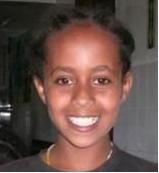
Hana Alemu

Who to blame for a tragic loss of a child’s life? 

Dangerous parenting skills, misguided disciplining practices or breakdown in the adoption process? 

By Dr Solomon Alemu Feyissa

 Background 

After China, most children adopted into the United States from abroad now come from Ethiopia, according to the US State Department. Adoption from Ethiopian by US parents grew from a little more than 100 in 2002 to more than 1,500 in 2012. In general, adoptions go very well however the case of Hana Alemu ( a.k.a Hana Grace-Rose Williams) is an extreme example of adoption going very bad and resulting in the death of the adoptee. 

Carri and Larry Williams, a Washington state couple who already have seven biological children of their own, adopted and brought Hana and a younger boy, Immanuel, who is deaf, to the United States from Ethiopia in 2008. The children arrived in the U.S. healthy and full of hope. Three years later, Carri (the mother) called 911 on a very cold spring night to report that “rebellious” Hana had “unintentionally killed herself” in the family’s backyard. 

What went wrong? 

Most people agree that the adoptive parents had a very harsh way of disciplining their children and dangerous parenting skills. It’s also well documented by the testimony of their own children that the parents abused their children regularly. When police investigators searched William’s residence for evidence they found a controversial child-rearing book (To Train Up a child, by Michael and Debi Pearl). 

Since the book’s original publication in 1994, a number of child abuse cases have cited the Pearls’ evangelical guidebook as the source of the offending parents’ behavior, but formal action has never been taken against the authors. A tragically common theme among the stories is the use of a quarter-inch thick length of plumbing pipe used to hit badly behaving kids; the Pearls (authors) call it the “Rod of Reproof,” citing a passage from the biblical book Proverbs as justification. 

The rod and reproof give wisdom: but a child left to himself bringeth his mother to shame. (Proverbs 29:15; KJB) 

According to this book parents are also encouraged to punish picky eaters with either “fasting” or force-feeding. ‘’A little fasting is good training.’’ ’’ If you get a child who is particularly finicky and only eats a limited diet, then feed him mainly what he doesn’t like until he likes it.’’ The Pearls (the writers of the book) do recommend treating a child who is slow to potty train with a spray of the garden hose, even in cold weather. 

Whether the Williams’ parenting skills, behavior and practices were influenced by this book or not it could be debatable however their child rearing practices were described in detail by their own children and well documented by different media outlets both local and national. 

In court proceedings Immanuel (the deaf adopted brother of Hana) has told the court with sign language that he and Hana were beaten, made to eat outside or deprived of food altogether. Hana was made to sleep in a closet, bath outside with a garden hose and relieve herself in a portable toilet instead of the family bathroom. Five of the Williams’ biological children have also testified, describing details of the punishments their adopted siblings received. 

It’s also reported that the adopted children survived on small amounts of frozen food or wet sandwiches — a diet that left Hana so emaciated, authorities believe malnutrition hastened her death. When hunger compelled Hana to “steal” food from the family kitchen, Carri Williams punished her further. Homeschooling kept the children isolated from outsiders who might have noticed their decline. 

The list of horrors continued; the Williams forced Hana to sleep locked in a dark closet or outside in a barn. She was made to use an outdoor toilet and shower with a garden hose. When Hana “refused” to wash the shampoo out of her hair, Carri Williams shaved the girl’s head. Photos of an emaciated and bald Hana — who’d arrived in the U.S. healthy and so full of hope — echoed the deplorable images of inmates in a concentration camp. 

The evening of May 12, 2011, was rainy and very cold when Carri Williams (the mother) called 911 and told dispatchers that Hana was unconscious and face down in the mud after refusing to come indoors. To the contrary the biological children have testified Hana was in the cold for hours as punishment, and that their mother had told Hana to do jumping-jacks to stay warm. When Hana stopped, her brothers were instructed to hit her legs with a plastic switch, according to court testimony. 

Investigators discovered that Carri William forced the girsl out in to the rain as punishment for perceived disobedience. It was very cold outside (temperatures around 40 degrees Fahrenheit) and was raining the whole day. Hypothermia-induced confusion drove Hana to shed her clothes in the cold. She lost consciousness soon after, and died alone, naked and face down in mud. By the time first responders reached the scene, her body had been wrapped in a sheet and dragged inside by her adoptive teenage brothers. Witnesses said no one in the Williams family shed any tears that night .An autopsy showed that Hana, 5 feet tall and weighing 78 pounds, was covered in scratches and bruises and that her hypothermia was hastened by malnutrition and a stomach ailment.

Action by law enforcement and child protective and social services 

Here are some steps taken to bring the perpetrators of this heinous act to justice and protect the livelihoods of the other children including Immanuel. 

Child protective and social services removed Immanuel from the family home, along with the Williams’ biological children. The children are currently in temporary foster homes. 

Local County prosecutors eventually charged Carri and Larry Williams with homicide by abuse of Hana, and with first-degree assault of Immanuel, Their bail was set at $150,000 for each. 

Larry and Carri Williams were on trial in Skagit County Superior Court, charged with homicide by abuse, manslaughter and child assault for allegedly abusing Immanuel and their adoptive daughter, Hana, and causing her death. 

Justice and closure 

Finally the jury convicted the parents in September 2013. Larry and Carri Williams were found guilty on all counts and sentenced to 28 and 37 years in prison respectively. 

Even if none of these actions would bring back the young life of Hana, conviction of the parents on all counts should bring justice to Hana’s wrongful death and closure to her family and friends and the community at large. 

Way forward/ Lessons learnt 

The case has highlighted the gaps in oversight and drawn attention to the challenges of adoption. Many argue that the biggest need is better oversight, whether by the state or a private agency. The state has laws to protect adopted children, but its authority is limited in private adoptions, such as that of Hana and Immanuel. Another problem is that there is no way to track the rates of abuse and neglect in adopted families. 

It’s also reported that responsibility for the problems is diffuse, with shortcomings at every step in the adoption process — assessing a family, identifying red flags and following up. 

Studies showed that in many cases discipline practices get way out of hand, and result in common pattern of physical and emotional abuse, including isolating and depriving children of food. Some parents’ parenting skills and discipline practices are influenced by misguided literature and religious believes as might have been the case in Hana’s death which underscore the need for further training of prospective adopters’ to prepare them for adoption. 

U.S. adoption agencies accredited under an international treaty known as The Hague Convention require parents to undergo at least 10 hours of pre-adoption training that can be completed online. However many argue that this training is very inadequate to prepare parents and suggest a more rigorous and thorough training.  

Writer’s opinion 

I would like to take this opportunity to express my heart felt sadness for the untimely death of Hanna and loss of her young life in this tragic way. My heart goes out to her family and friends. I also believe that justice was served by the conviction of the adoptive parents for her wrongful death it should also bring some closure. Her story is probable very well reported in Seattle metropolitan area by local media. Many Ethiopians living in the area are very well aware of the tragic story and some have even attended court proceedings. Lately the story is also getting national attention and coverage as the couple was recently convicted by the jury. The writer believes that the story should be publicized to a larger audience to address the flaws of adoption practices and behaviors and learn some lessons to avoid another tragedy in the future. The writer also encourages others to join the conversation and contribute to the discourse.  

References:
 
 
1. The legacy of Ethiopian adoptee Hana Williams: By Sharon Van Epps, Huffington Post Blog 11/4/2013
 
2.Murder charges for parents who left a girl outside, The Seattle times, 09/29/2011.
 
3. Couple pleads not guild’s in homicide of adopted daughter, KOMO news.com 11/06/2011.
 
4.Did the Disturbing Philosophy of To Train Up a Child Lead to Hana Williams’ Death? Slate.com Blog. J. Bryan Lowder 11/03/2011
 
5.Adoptive parents on trial in Ethiopian girl’s death, The Seattle times. 08/20/2013.
 
6.Washington couple weep as they are sentenced to nearly 30 years in prison for death of Hana Williams, NY daily news/Associated Press. 10/30/2013.


Solomon  A. Feyissa, M.D. is a practicing Internist/Hospitalist in DC metro/Baltimore area.


Posted in Current events, Obituary | 5 Comments

Queen Taytu Bitul Hayle Mariam (1851-1918)

 Summarized by Surafel K Gebreselassie

Queen Taytu

  • Princess Taytu was born at about 1851. Her father Prince Betul Hayle Maryam died in battle on June 29, 1853 when Taytu was only 3 years old.
  • Princess Taytu married Menelik II, King of the Ethiopian province of Shewa on Easter Sunday in 1883.
  • She often wore her head in cornrow braids which connected in ponytail at the back.
  • She was 1.6 meter tall and wore European size 39 shoes.
  • She is credited for choosing the site for Menelik II’s new capital, Addis Ababa
  • They were crowned as emperor and empress of Ethiopia in coronation ceremony of magnificent splendor with jewels and a golden crown for Taytu in 1889 following the death of Emperor Yohannes.
  • 1889 ( May 2nd) : Menelik signed the Treaty of Wuchale with Italy
  • Article 17 stated in Italian version that Italy would control Ethiopia’s external affairs; the Amharic version said that Menelik could choose whether or not to ask the Italians to act on his behalf, but was not required to do so.  Ethiopians said it was a trick; Italians blamed the Ethiopian translator Geraz. Yosef Neguse who knew French but not Italian.
  •  October 1889, Italy declared a protectorate over Ethiopia on the basis of article 17.
  • A great furor resulted at Menelik’s court; Empress Taytu came close to accusing her husband of treason.
  • Empress Taytu was feared; at court she anchored the anti-European faction.
  • 1893 ( Feb 27th) Menelik renounces Treaty of Wuchale
  • 1895 ( Sep 17th) Menelik calls for total mobilization of Ethiopian forces
  • Five hundred solders guarded the empress and her entourage of about one hundred women and took care of preparing the food for the soldiers
  • 1896 ( Feb 14): Menilek and Taytu arrive at Adwa
  • March 1st: Menelik and Taytu destroy Italian army at the battle of Adwa and achieved a stunning victory over the Italians.
  • Italy lost 70% of its forces; 3000-4000 taken prisoners.
  • Oct 26th : Treaty of Addis Ababa in recognition of Ethiopians independence
  • After the emperor’s health deteriorated in 1907, Empress Taytu was actually in charge of running the country
  • Menelik died in 1913; Taytu died five years later in 1918 at the age of 67.
  • The influential empress Taytu helped create the modern Ethiopian nation along with her husband, King Menelik II.

REFERENCES

  • Jonas, R. (2011). The Battle of Adwa: African Victory In The Age of Empire,Cambridge:Harvard University Press
  • McLachlan, S. (2011). Armies of the Adwa Campaign 1896: The Italian Disaster in Ethiopia, Oxford: Osprey Pulishing Ltd.
  •  Prouty, C. (1986). Empress Taytu and Menilek II: Ethiopia 1883-1910, New Jersey:The Red Sea Press.
  •  Marcus, H.G. (2002). A History of Ethiopia: Los Angeles: University of California Press.
  •  Hansen, J.(2004).African Princess: The Amazing Lives of Africa’s Royal Women, NY: The Madison Press Ltd
Posted in History | 2 Comments

Are you feeling stressed? The emotional impact of following social media news of traumatic events

By  Dr Bikat Sahle

While social media publicity have been playing a crucial role in the effort to bring to light the human rights violations and abuse of migrant Ethiopians in Saudi Arabia, the excessive exposure to the gruesome details of the situation on media can have a negative emotional impact on those following the news closely, both local Ethiopians as well as those in the diaspora.

When a large scale trauma like the current crisis in Saudi Arabia occurs, it is difficult for people to limit the amount of time they spend watching the news and media reports. Some may find it hard to resist seeing the perturbing images as they may feel that they owe the support to the threatened brothers and sisters that they closely follow the developments. While having access to news is a critical need in the aftermath of trauma, excessive exposure to the details of the trauma through media can also pose a risk.

Studies conducted after traumatic events in the US (World Trade Center, Oklahoma bombing), found an association between people who watched more media news of the traumatic events, and heightened stress, depression, and Post Traumatic Stress Disorder (PTSD). It was also found that children who watched more media coverage of traumatic events had higher trauma-related symptoms. This warrants that exposure to the details of traumatic events via media can have negative emotional consequences.

Vulnerable populations like children, those with family members currently at risk, those with personal trauma history, and the public should be advised to be cautious of the risk of excessive exposure to the details and images of the horrific acts.

Children: Parents and the community at large should be aware that exposing children to the terrifying news and graphic images of the crisis can create emotional distress. Adults should be very cautious not to have conversations about the event in the presence of children or let them watch the news of the incident. If you see that your child is already having anxiety, stress, and sleep problems, it is good to talk to them about it and allow them to express their feelings, as well as reassuring them that they are safe with you. If the problem persists, you may seek professional help for them.

Adults who may be high risk for developing stress reactions to the news and distressing images are individuals who have family members and friends in the Saudi Arabia cities where there are serious threats on Ethiopian migrants. If you are one of those people who have a loved one in the heat of the crisis, you will have to have strategies to cope with the emotional distress as recommended below.

Individuals who previously encountered difficult circumstances such as witnessing violence, death of a loved one, accidents, traumatic child birth, physical or sexual abuse as a child or adult, witnessing another’s death from traumatic illness, you are more likely to be re-traumatized by the news and may experience a new sets of symptoms.

In addition, if you have been closely watching social media and the images of the torture, blood, and dead bodies posted online, you should examine yourself to determine how stressed and anxious you are since you learned about the situation. If you see that you are being more and more stressed about the event, having sleep difficulties and depression, you probably need some strategies as well.

Ways to cope to prevent the stress from watching the news and graphic images

(1) You can ask other people to summarize the news stories for you and tell you about it rather than you seeing the images.

(2) You can limit the amount of time you spend watching the news or talking about it with others, such as 30 minutes in the morning and evening. You can read other unrelated topics the rest of the day.

(3) You can focus your energy on planning or other activities on how you can help your loved ones upon their return rather than ruminating on the news excessively.

(4) You can develop coping skills for stress management by practicing distraction, going out to public areas, malls or coffee shops with friends, journaling your feelings, doing relaxation techniques such as walking or exercising, doing prayer and meditation, going to your church or religion’s worship houses, praying with others and holding vigils, etc.

(5) If you are experiencing sleep problems, severe stress, and depression, you are advised to also seek professional help from your physician who can treat you with anti-anxiety or antidepressant medications. Remember that the stress reaction you are having is a normal reaction to a very abnormal situation and you don’t have to feel ashamed for seeking help from a professional.

In conclusion even though it is difficult to resist watching the news closely when a serious trauma breaks out, it is also important to be self-reflective and evaluate how you are being impacted by what is happening. You may have to limit your exposure to the details of the traumatic news so to preserve yourself.

References :

Ahern, J., Galea, S., Resnick, H., Kilpatrick, D., Bucuvalas, M., Gold, J., & Vlahov, D. (2002). Television images and psychological symptoms after the September 11 terrorist attacks. Psychiatry, 65, 289-300.

Pfefferbaum, B., Moore, V., McDonald, N., Maynard, B., Gurwitch, R., & Nixon, S. (1999). The role of exposure in posttraumatic stress in youths following the 1995 bombing. Journal of the State Medical Association, 92, 164-167

Schuster, M.A., Stein, B.D., Jaycox, L.H., Collins, R.L., Marshall, G.N., Elliott, M.N., et al. (2001). A National Survey of stress reactions after the September 11, 2001 terrorist attacks. New England Journal Medicine, 345, 1507-1512.

Posted in Current events, Health | 1 Comment